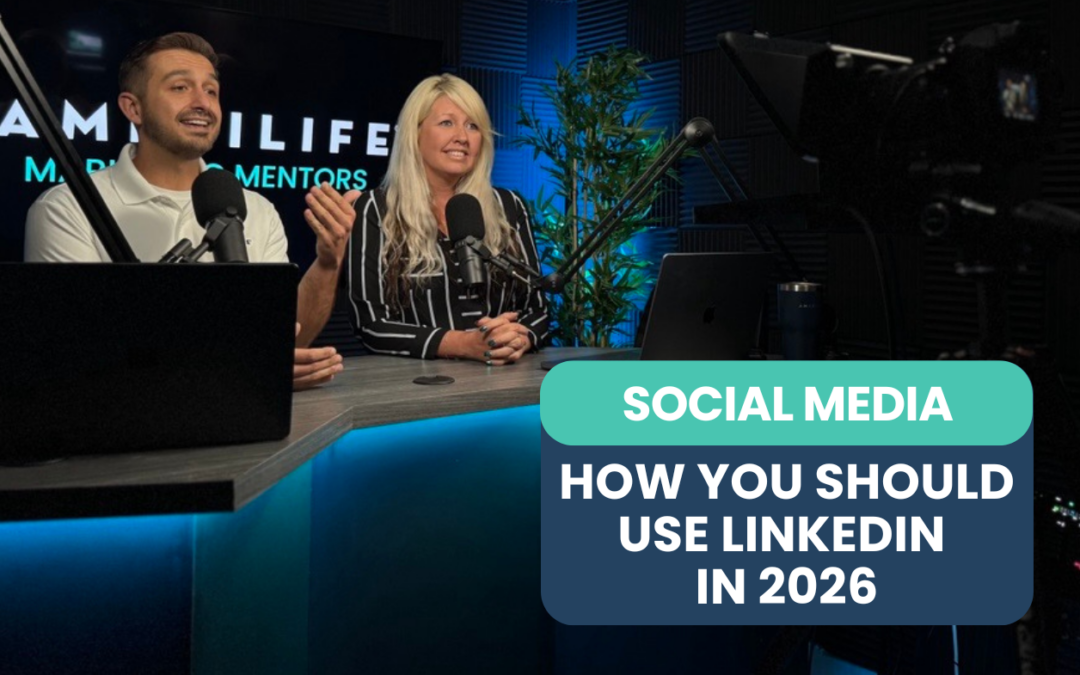
LinkedIn for Insurance Agents: How to Build Authority and Visibility in 2026

LinkedIn for Insurance Agents: How to Build Authority and Visibility in 2026

LinkedIn for Insurance Agents in 2026

If you are an agent or advisor still treating LinkedIn only as a job board, you’re already falling behind your competition. LinkedIn has become one of the most powerful marketing platforms available to agents and advisors whose entire business runs on trust. The agents who recognize that shift are building real authority and visibility right now. 

At AmeriLife Marketing Mentors, we give agents the tools, strategies, and practical guidance they need to succeed in today’s digital landscape. This blog breaks down how LinkedIn for insurance agents works in 2026 and shows you exactly how to use the platform within your social media strategy to build authority, increase visibility, and stay competitive. 

Why LinkedIn Matters for Agents and Advisors in 2026

A Platform Built on Professional Trust

LinkedIn brings together professionals who want to learn, grow, and do business. It gives you the perfect opportunity to network because the platform is built for that exact purpose. Prospects, recruits, and referral partners show up here with professional intent, making them far more receptive to business conversations than audiences on entertainment-focused platforms.

Where Intellect Meets Social

Think of LinkedIn as the platform where intellect meets social. Users expect business-focused conversations and educational content. That mindset makes LinkedIn for insurance agents a natural fit. People log in ready to learn, not just scroll.

More Than a Job Search Tool

Many agents and advisors now use LinkedIn as a full marketing channel. You can attract new clients, connect with referral partners, and recruit talented team members all in one place. The agents who recognize this shift gain a serious competitive advantage.

WATCH: If You’re Ignoring LinkedIn in 2026, You’re Falling Behind

Using LinkedIn to Build Authority and Personal Brand 

Make Your Profile Match Who You Want to Be Known For 

Your LinkedIn profile needs to reflect exactly who you are and who you serve. Place specific keywords throughout your headline, your “About” section, and your experience details. If you want to be known as an insurance professional who helps families protect their financial future, say that clearly and repeat those keywords throughout your profile. 

Choose One Niche and Own It 

Pick one focus area and build your content around it. A focused profile helps the right people find you and helps LinkedIn understand your audience. Trying to appeal to everyone usually means reaching no one. 

Show Up Like You Would at a Networking Event 

The AmeriLife Marketing Mentors’ perspective on this is simple: treat LinkedIn like a professional networking event. Connect with as many right-fit professionals as possible, share your knowledge, and start real conversations. The same energy you bring to an in-person event belongs on your LinkedIn feed.

How the LinkedIn Algorithm Really Works 

The algorithm rewards consistency above almost everything else. When you post regularly on a specific topic, LinkedIn learns who you are and which feeds to place your content in. The more you stay on topic, the harder the algorithm works in your favor. 

Sporadic posting confuses everything. If you post about insurance one week, cooking the next, and personal fitness the week after, the platform loses track of your audience entirely. Your reach drops and you have to rebuild momentum from scratch. 

Engagement goes deeper than you think. LinkedIn tracks whether users click “see more,” how long they spend on your post, and whether they visit your profile afterward. Comments and connections tell the algorithm that your content holds real value for the right audience. 

What to Post on LinkedIn (and How Often) 

Post One to Three Times Per Week 

You do not need to post every single day. Posting one to three times per week with high-value, audience-focused content puts you ahead of the majority of agents on the platform. Answer the questions your clients actually ask. Give them a reason to follow you and keep coming back. 

Recycle Your Best Content 

LinkedIn recycles posts that are two to three weeks old, which gives your content a longer shelf life here than on almost any other platform. An evergreen post about Medicare enrollment or term life basics can earn new views weeks after you first publish it. 

Quality Beats Timing Every Time 

The exact day or time you post matters far less than the quality of what you share. Test different days and times to discover what works best for your specific audience, but always put value first. A mediocre post at the perfect time still underperforms a great post at an average time. 

WATCH: What Agents & Advisors Should Post on LinkedIn  

Content Formats That Perform Best on LinkedIn 

Carousels consistently drive strong engagement. As long as you provide real value, carousel posts tend to reach and hold attention well. Video content continues to see an uptick in both reach and engagement, and text-only posts have recently made a strong comeback on the platform. 

Device matters more than you might expect. Desktop users respond well to images and carousels, while mobile users engage more with text-only posts. Removing an image from a mobile-formatted post can generate a meaningful increase in impressions. 

Track impressions, not just likes. Many LinkedIn users scroll and absorb content without ever tapping like or leaving a comment. Impressions show your true reach and give you a clearer picture of whether your content actually resonates. 

RELATED: Marketing Analytics & AI Metrics Insurane Marketers Need in 2026

LinkedIn, AI, and the Future of Visibility 

Your LinkedIn Content Now Feeds AI Search 

LinkedIn content appears in over 10% of AI-generated responses across major language model search tools. This means your public posts reach audiences far beyond LinkedIn itself. Consistent, on-topic content builds your authority both on the platform and across the broader AI-powered web. 

Thoughtful Comments Drive Real Visibility 

One of the most powerful habits you can build is leaving five thoughtful comments on topic-related posts every single day. Search for keywords relevant to your niche, find the conversations already happening, and add your perspective. Each comment expands your visibility and draws new viewers back to your profile. 

Keep Your Voice Authentic 

Use AI to research ideas, outline posts, or brainstorm angles. But keep your comments and responses in your own words. Your authentic voice builds the trust that drives real business relationships. AI can speed up your process, but it cannot replace your genuine experience and perspective.

Frequently Asked Questions 

Why is LinkedIn for insurance agents so important in 2026? 

LinkedIn for insurance agents is important because it is a trusted, professional platform where prospects, recruits, and even AI tools look for credible authority. 

How often should agents post on LinkedIn? 

Many agents see strong results posting on LinkedIn one to three times per week with consistent, high-value content. 

What type of content works best on LinkedIn for insurance agents? 

Educational posts, carousels, simple graphics, and focused text posts perform best for LinkedIn for insurance agents. 

Does the LinkedIn algorithm favor large followings? 

No, the LinkedIn algorithm rewards consistency and relevance, making LinkedIn for insurance agents a level playing field regardless of follower count. 

How does AI impact LinkedIn for insurance agents? 

AI tools increasingly pull insights from LinkedIn, meaning consistent posting and thoughtful comments can boost your authority well beyond the platform itself.

You Already Have What It Takes 

LinkedIn for insurance agents has never offered more opportunity than it does right now. You build authority by staying consistent, focused, and genuine. You expand your reach by understanding how the algorithm works and by showing up for your community every single week. And with AI now pulling directly from LinkedIn content, your posts carry more weight than ever before. 

Start where you are. Post once this week. Leave five thoughtful comments. Update your headline with the keywords your ideal clients actually search for. Small, consistent actions build real visibility over time. 

Ready to grow your marketing game? Visit AmeriLife Marketing Mentors to explore more resources, tools, and podcast episodes built specifically for agents like you. 
How to Use AI Tools as an Insurance Agent (Without Getting Overwhelmed)

How to Use AI Tools as an Insurance Agent (Without Getting Overwhelmed)

How to Use AI Tools as an Insurance Agent (Without Getting Overwhelmed)

Author: Jo Barker

Quick Answers 

How can insurance agents use AI tools like ChatGPT, Copilot, or Claude? 

Insurance agents can use AI tools to create content, write follow-up emails, brainstorm post ideas, and build their personal brand online. The key is to set the tool up correctly first so it understands who you are, then start with one task and get good at it before moving on. 

Which AI tool is best for insurance agents, ChatGPT, Copilot, or Claude? 

All three can help you with content and marketing tasks. ChatGPT is the most widely used and has the largest library of tutorials. Microsoft Copilot is built into Microsoft 365 which many agents already use. Claude tends to produce longer, more conversational writing. Try the one that fits your existing tools and stick with it. 

What should an insurance agent use AI for first? 

Start by setting up your AI tool so it knows who you are. Then use it to interview you about your business. Use those answers to create your first piece of content. Master that one workflow before you try anything else. 

Will AI make my content sound like me? 

Only if you train it to. Out of the box, AI sounds generic. The agents who get the best results spend time upfront teaching their tool who they are, how they speak, and who they serve. After that, the content it helps you create actually sounds like you. 

Every week I talk to agents who are excited about AI tools and completely overwhelmed at the same time. They have signed up for ChatGPT, maybe poked around in Copilot, heard someone mention Claude, and watched a dozen YouTube videos about prompts. 

And then they have done nothing with it. Or they have started five different things and finished none of them. 

Sound familiar? 

Here is what I tell every agent I work with. The problem is not the tool. The problem is that nobody told you where to start. So you started everywhere, which is the same as starting nowhere. 

Train your AI like you would train a new assistant. Make sure it knows you before you let it speak for you. 

That is the principle behind everything in this post. By the end you are going to know exactly where to start, what to do first, and how to build from there at your own pace. 

First, let’s clear something up about the tools 

ChatGPT, Microsoft Copilot, and Claude are all large language models. That is just a fancy way of saying they are AI tools that understand and generate text. They are not the same product but they do similar things, and for what we are going to talk about today, any of them will work. 

Here is a quick way to think about each one: 

  • ChatGPT (by OpenAI) is the most widely used and has the most tutorials and examples available. Great starting point if you are brand new. 
  • Microsoft Copilot is built into Microsoft 365. If you already use Word, Outlook, or Teams, this one fits naturally into your existing workflow. 
  • Claude (by Anthropic) tends to write in a more conversational tone and handles longer pieces of content well. Good if you want output that feels more human. 

Pick one. Not all three. The tool matters a lot less than how you use it. 

Step one: Set up your tool before you ask it to do anything 

This is the step most agents skip and it is the reason their content comes out sounding generic. When you open a new AI tool and just start typing questions, it has no idea who you are. It is going to give you the same answer it would give any insurance agent on the planet. 

Think about it this way. If you hired a new assistant and handed them the phone on day one without any introduction, you would not be surprised if they said the wrong things. The same principle applies here. 

Here is what to tell your AI tool upfront. You can paste this in as your first message or save it in the custom instructions settings: 

Sample Setup Prompt: 

I am [Your Name], a licensed insurance agent based in [City, State]. I specialize in [your niche, e.g. Medicare, life insurance, health insurance for small businesses]. My clients are typically [describe your ideal client]. My communication style is warm, straightforward, and conversational. I do not use insurance jargon or corporate language. I want my content to sound like me talking to a client across the table, not like a press release. When I ask you to help me write something, always write in first person, keep it simple, and make it feel human. Never use em dashes. Do not start sentences with I when possible. 

Fill in the blanks with your actual information and save this somewhere you can paste it quickly. Every time you start a new chat, drop this in first. Now the tool knows who it is working with. 

Step two: Let it interview you 

This is my favorite thing to teach agents and the one that gets the biggest reaction every time. Instead of sitting there trying to figure out what to write, flip it around. Let the AI ask you the questions. 

Here is the prompt to use after your setup message: 

Interview Prompt: 

I want to create a LinkedIn post about [topic, e.g. why referrals are not enough anymore]. Instead of writing it for me right away, I want you to interview me first. Ask me five questions one at a time. Use my answers to write the post in my voice after we are done. 

What happens next is the part agents love. The AI starts asking you real questions about your experience, your clients, and your perspective. You answer in your own words. It uses those answers to write something that actually sounds like you, because it literally came from you. 

This one workflow alone can produce weeks of content. And it takes the blank page problem completely off the table. 

Step three: Use it for inspiration posts, not just finished content 

Once you have the interview workflow down, the next thing to add is using your AI tool for inspiration. This is different from asking it to write something for you. You are asking it to help you think. 

Here are a few prompts that work well for this: 

Inspiration Prompts to Try: 

  1. Give me 10 LinkedIn post ideas for an insurance agent who specializes in Medicare. Focus on posts that educate without selling.
  2. What questions do people ask Google about life insurance that I could answer in a short blog post?
  3. I want to post about a common mistake clients make when picking their coverage. Give me five angles I could take.
  4. What are the most searched questions agents ask about marketing themselves online? Give me alist I can turn into content. 

Use these outputs as a starting point, not a finished product. Pick the idea that resonates, go back to the interview method, and let the AI pull the real content out of you. 

The rule that keeps everything on track 

Here is the mistake I see over and over. An agent discovers the interview method, loves it, and then immediately wants to use the AI for email campaigns, website copy, follow-up sequences, social media, video scripts, and a newsletter all in the same week. 

And then they finish none of it. 

The fortune is in the follow through. That applies to AI just as much as it applies to everything else in your marketing. 

Here is the rule I want you to follow: 

Pick one task. Do it ten times. Then add the next one. 

For most agents that first task should be the interview method for LinkedIn posts. Do it ten times. Get comfortable with how to guide the tool, how to give good answers, and how to edit the output so it sounds exactly like you. Once that feels easy, add the next workflow. 

What AI should never do for you 

There is a version of this that goes wrong and I want to be direct about it. If you hand your AI tool a topic and publish whatever it gives you without reading it, adding your voice, or making sure it is accurate, your content is going to feel hollow. People can tell. 

Your clients trust you because they know you. Your content has to reflect that. AI is a tool to help you show up more consistently and more confidently. It is not a replacement for your experience, your judgment, or your personality. 

Always read what it produces. Always add one thing that only you would know. And never post anything you would not say out loud to a client sitting across from you. 

Your action plan for this week 

Here is exactly what to do. One step at a time. 

  1. Pick your tool. ChatGPT, Copilot, or Claude. Just pick one and stick with it. 
  2. Write your setup prompt using the template in this post. Fill in your name, location, niche, and tone. 
  3. Open a new chat, paste your setup prompt, and read back what it says to confirm it understood you. 
  4. Use the interview method to create your first LinkedIn post. Let it ask you five questions. Answer honestly. See what it creates. 
  5. Edit the output until it sounds exactly like you. Then post it. 
  6. Do the same thing next week. And the week after that. 

That is it. Six steps. Do not add anything else until you have done those six things at least four times. 

Final thought 

AI tools are not going to replace good insurance agents. But agents who know how to use them are going to have a real advantage over agents who do not. The gap is not about the technology. It is about who actually puts in the work to learn one thing at a time and follows through. 

You do not need to be a tech person. You just need to treat this like you would treat training any new assistant. Teach it who you are. Give it clear direction. Check its work. And let it help you show up consistently for the people who need to find you. 

Start with one task. Follow through. The rest will build from there. 

About the Author 

Jo Barker is a licensed insurance agent and digital marketing expert specializing in SEO, AEO, GEO, and personal branding. She helps agents and advisors build a real online presence that generates leads, builds trust, and grows their business. Connect with her at MarketingMentors.AmeriLife.com.

Social Media for Insurance Agents: How to Get Results Without Overwhelm

Social Media for Insurance Agents: How to Get Results Without Overwhelm

Social Media for Insurance Agents: How to Build a Strategy You Can Stick With

Do you feel stuck when it comes to social media? Many licensed insurance agents know they should be posting on social platforms but have no clear plan for how to do it well. Social media is one of the most misunderstood parts of marketing because the goals are not always obvious. 

At AmeriLife Marketing Mentors, we help agents cut through the noise. In this post, we share key social media strategies so you can build a social media plan that produces real business results.

Why Social Media Matters for Insurance Agents 

Your audience already spends hours a day online 

People scroll through their social feeds every single day. They look for answers, stories, and trusted voices. When you show up in their feeds regularly, you become a familiar face before they ever pick up the phone. That familiarity drives real conversations and real referrals. 

Social media builds trust before the first conversation 

Clients choose people they feel comfortable with. When insurance agents use social media in a consistent and helpful way, you build that comfort over time. By the time someone reaches out for a quote, they already feel like they know you. That connection makes every conversation easier and more natural.

How to Use Social Media Without Feeling Salesy 

Many licensed insurance agents worry about looking too pushy online. The good news is that the most effective social media content for insurance agents is not about selling at all. 

The 70/30 content rule: value first, business second 

A simple rule keeps your content balanced. Use 70 percent of your posts to share pure value. Answer common questions, explain coverage terms, and share tips that help your audience. Reserve the remaining 30 percent for business content like product updates or invitations to connect. This balance keeps your feed helpful and interesting without turning it into a constant sales pitch. 

Think of one person, not 500 

Social media can feel intimidating when you imagine speaking to hundreds of people at once. Instead, picture just one person. Give that person a name. Think about their situation and write every post as if you are speaking directly to them. This shift makes your content feel personal and approachable rather than generic and forgettable. 

WATCH: The 70/30 Rule That Fixes Your Facebook Content 

Choosing the Right Platforms for Your Target Audience 

You do not need to be everywhere. Real success with social media marketing comes from focusing your energy on the right place. 

Why knowing your ideal client matters more than being everywhere 

Different clients spend time on different platforms. An insurance agent focused on Medicare clients will reach a very different audience than one focused on young families buying life insurance. Know exactly who you want to reach before you decide where to post. 

Start with Facebook if you are brand new to social media 

If you have never tried social media before, Facebook is your best first step. Join local groups and listen to what people talk about before you ever post. Facebook groups give you deep insight into your audience’s real concerns and challenges. That insight shapes your content strategy from day one. 

WATCH: Best Social Media Platforms for Business in 2026

How Insurance Agents Should Use Facebook, YouTube, and LinkedIn 

Each platform serves a different purpose. Here is how you can make the most of all three. 

Facebook for local connection and relationship building 

Facebook helps you build roots in your local community. Share useful tips, celebrate local events, and show up as a trusted neighbor. When people in your area need insurance guidance, you want to be the first name they think of. 

YouTube for educational content and long-term visibility 

YouTube is the number one social media platform for content right now. Getting comfortable on camera takes time, but you do not need to wait until everything is perfect. Start with a simple intro video. Tell people who you are, what you do, and who you help. Then turn that video into short clips. Your videos stay searchable for years, which means new clients can find you long after you press publish. 

WATCH: The Content System Agents & Advisors Need to Grow on YouTube 

LinkedIn for professional networking and credibility 

On LinkedIn, aim to post about three times a week if it fits your schedule. Otherwise, post in a cadence you can actually stay consistent with. The real key to LinkedIn is engagement. Comment on other people’s posts and respond to every comment you receive. LinkedIn helps you build relationships with referral sources like financial advisors and real estate agents who can send clients your way and expand your professional network.

Creating Consistent Content Without Burnout 

Content creation does not have to eat up your whole week. The smartest strategy for social media for insurance agents is to work smarter, not harder. 

One video equals a month of content 

Record one 10-to-15-minute video on a topic you know well and talk about all the time. That single recording gives you a blog post, multiple social media posts, several short-form clips, and more. One session can cover an entire month of content across every platform. You do not need to overthink it. You just need to start. 

Repurpose across platforms without starting from scratch 

Once you create that anchor video, break it into smaller pieces for each platform. Post a clip on Facebook. Pull a key point and turn it into a LinkedIn post. Upload a YouTube Short. Your message stays consistent while your effort stays manageable. This approach keeps agents visible without requiring hours of work each week. 

WATCH: Turn 1 Video Into 30+ Pieces of Content (Simple System)

How Often Should Insurance Agents Post on Social Media? 

Start with a schedule you can actually keep 

The biggest mistake agents make is committing to posting every day and then burning out by week two. Give yourself permission to start small. One post per week counts. One post every two weeks counts. Consistency over time beats a burst of activity followed by weeks of silence. 

Let engagement and data guide your growth 

As you post, pay close attention to what your audience responds to. Focus on the metrics that drive real business outcomes, not just likes and follower counts. When a specific topic gets strong engagement, create more content around that theme. Let your audience tell you what they want to see next. 

Frequently Asked Questions 

What is social media for insurance agents used for? 

Social media for insurance agents helps you build trust, stay top of mind, educate prospects, and support long-term business growth without relying on constant selling. 

Which social media platform is best for insurance agents? 

Facebook is often the best starting point because it allows licensed insurance agents to connect locally and build community relationships, while YouTube and LinkedIn support education and professional networking. 

How often should insurance agents post on social media? 

Post as often as you can stay consistent. Starting with one post per week is completely fine, and you can scale up from there as the habit becomes sustainable. 

What type of content works best on social media for insurance agents? 

Educational, authentic, and value-driven content works best. Focus on helping people make informed decisions rather than promoting products. 

How can insurance agents create content without spending hours each week? 

Record one long-form video and repurpose it into multiple posts, blogs, and short clips. This lets licensed insurance agents stay visible without content burnout. 

You Have Everything You Need to Get Started 

Social media for insurance agents does not have to feel overwhelming. When you pick the right platforms, follow the 70/30 rule, and repurpose one strong piece of content across channels, you can stay visible without burning out. Start small, stay consistent, and let the results grow over time. 

Ready to go deeper? Visit AmeriLife Marketing Mentors for practical marketing strategies and resources designed to help you grow your business with confidence. 

Facebook Isn’t Dead: What Insurance Agents Need to Know in 2026

Facebook Isn’t Dead: What Insurance Agents Need to Know in 2026

Facebook Isn't Dead: What Insurance Agents Need to Know in 2026

You’ve probably heard someone at some point say, “Facebook is dead.” 

It isn’t. Especially not for insurance agents. 

At Amerilife Marketing Mentors, we work with agents every day who are growing their business on Facebook right now. If your audience includes adults 50, 55, or 65+, the question is simple: where are they spending their time online? 

The answer is Facebook. This guide breaks down the Facebook marketing for insurance agents in 2026 that actually works. 

Why Facebook Still Matters for Insurance Agents 

Your Best Clients Are Already There 

In the life, health, and annuity space, especially Medicare, your target audience skews older. That is not a disadvantage. That is your edge. Stop chasing trends on every new platform and show up where your people already are. 

It’s Built for Relationship Marketing 

Insurance is a relationship business. People do not buy Medicare plans from strangers. They buy from agents they trust. Facebook gives you the tools to build that trust through consistent content, community interaction, and genuine conversation. 

What Kind of Content Performs Best on Facebook? 

Follow the 70/30 rule. Take 70% of your content and make it social and community-based: community news, local events, behind-the-scenes moments, content that helps your audience get to know you. Reserve 30% for industry content: educational tips, insurance reminders, and light promotional posts. 

People come to Facebook to connect, not to be sold to. Lead with value and personality, and they will be ready to listen when you share business content.

Why Photos and Videos Outperform Graphics 

Real People Stop the Scroll 

One of the most underutilized tools in Facebook marketing for insurance agents is simple: real photos and videos of you out in your community. 

When your audience already engages with family photos and event snapshots from friends, Facebook recognizes that behavior and rewards it by showing more of that content in their feed. Authentic moments build trust faster than polished graphics. Show up at a local event. Share a quick video from your office. These small moments add up to big credibility. 

How Reels, Stories, and Instagram Fit In 

Expand Your Reach Without Extra Work 

Facebook lets you share Reels, short videos that gained massive popularity on Instagram. You can post on both Facebook and Instagram in one step, so one piece of content reaches two audiences simultaneously. If you want to grow your presence without doubling your workload, Reels are one of the smartest tools available to you. 

Stories Drive Daily Visibility 

Facebook and Instagram Stories are 24-hour pieces of content that sit at the top of your followers’ feeds. Use them for quick updates, event reminders, or a call-to-action driving people to your website. They disappear after a day, which keeps your content feeling fresh. 

Organic Posting vs. Paid Facebook Ads 

While you’re building your audience, organic posts will only reach so many people; so paid tools matter. 

Boosting Posts: Reach the Audience You’ve Already Built 

Put a small budget behind your best posts. Even $5 or $10 in a boost delivers your content to people who already liked your page but may have missed it. Boosting is not a shortcut. It ensures your best content actually gets seen. 

Facebook Ads: Find New Clients Outside Your Page 

Boosted posts reach existing followers. Ads reach entirely new people. A targeted Facebook ad campaign puts your message in front of the right demographic in your area when you are ready to grow beyond your current following.

Smart Budgeting for Facebook Ads 

Start Small and Test First 

Never start with more than $30 per day. In most markets, $10 to $20 a day is more than enough. Run ads Monday through Friday, and you do not need to run them seven days a week. Test your content first, find what resonates, and then increase spend behind the winners. 

The Power of Educational Content 

Go Back to Basics: It Always Works 

Medicare 101, insurance basics, and annuity fundamentals consistently perform well. You are not selling. You are teaching. When you break down complex topics simply and honestly, skeptical audiences start to trust you. That trust turns into conversations, and those conversations turn into clients. Try a short webinar, a video series, or a simple downloadable guide to get started.

Using Facebook Groups to Build Community 

Local Groups Are a Hidden Goldmine 

Facebook Groups focused on local community conversation are powerful tools for organic visibility. You do not need to promote yourself constantly. Show up, read what people are discussing, and jump in when you have something genuinely helpful to add. As you build credibility, consider starting your own private group, a dedicated space for clients and prospects to ask questions and stay connected. 

Engagement Is Non-Negotiable 

Social Media Is Still About Being Social 

When someone leaves a comment, respond. When someone sends a DM, reply promptly. Fast responses build credibility and signal that you are present and ready to help. Do not just broadcast your message and walk away. Start real conversations. 

Frequently Asked Questions 

Is Facebook marketing for insurance agents still effective in 2026? 

Yes. Facebook remains one of the best platforms for reaching adults 50+ and building long-term trust. 

How often should insurance agents post on Facebook? 

Consistency matters more than frequency. Posting 3–5 times per week is a strong starting point. 

What type of Facebook content works best for insurance agents? 

Photos, short videos, Reels, and educational content consistently outperform text-only posts. 

Do insurance agents need a big ad budget for Facebook marketing? 

No. Facebook marketing for insurance agents can be effective with as little as $10–$30 per day. 

Should insurance agents use Facebook groups? 

Yes. Community groups are powerful for visibility, trust, and organic lead opportunities.

Put Your Facebook Marketing Strategy to Work 

Facebook marketing for insurance agents is not just alive in 2026. It is one of the most cost-effective ways to reach your ideal clients and grow your business. Show up consistently. Share real content. Engage like a human. Spend wisely on ads. Teach before you sell. Your clients are on Facebook. Meet them there. 

Ready to level up your marketing? Contact Amerilife Marketing Mentors for tools, training, and expert guidance built specifically for insurance agents like you. 

Authenticity in AI Marketing: How to Build a Personal Brand That Stands Out

Authenticity in AI Marketing: How to Build a Personal Brand That Stands Out

Authenticity in AI Marketing: Why Your Personal Brand Matters More Than Ever

Picture this: You open LinkedIn and see three different agents posting about retirement planning. They all sound exactly the same. Same formatting. Same phrases. Same vibe. You cannot tell them apart because they all used AI to write their posts and just hit “copy and paste.” That is the problem we face today with authenticity in AI marketing. 

At AmeriLife Marketing Mentors, we help agents like you navigate the changing digital landscape. We answer your questions like “how do I use AI responsibly without losing your authentic voice? Let’s dive into some insights and practical advice for building a personal brand that stands out in 2026. 

Why Authenticity Matters in an AI-Driven World

If you have already started building your personal brand, people know you. They know how you speak and how you write. Some of your connections have followed you for years. When you suddenly start using AI-generated content without refining it, your voice changes overnight. Everyone starts to sound the same, and that is when you risk losing trust.

Trust Is Easier to Lose When Content Feels Generic

Your audience notices when something feels off. If your content suddenly sounds like a robot wrote it, they question whether it is really you. The relationships you have built over time depend on consistency and authenticity.

Audiences Recognize When Messaging Doesn’t Match Your Voice

Customers who have followed you for years will spot the difference in your communication immediately. That disconnect creates doubt and weakens the trust you have worked so hard to build.

AI Can Amplify Sameness If Not Refined

When everyone uses the same tool the same way, everyone sounds identical. Your unique perspective disappears into a sea of generic content. Remember, it is you that sets you apart. Artificial intelligence should be used for inspiration, but you still need to make sure the final content is truly something you would say.

What Personal Branding Really Means for Agents 

2026 is all about building your personal brand. But what does that actually mean? 

Your Experience and Perspective Are Irreplaceable 

Think about your origin story. Why did you get into this business? That personal journey belongs only to you. Your years of experience, the lessons you have learned, and the way you approach challenges cannot be replicated by anyone else. 

Personal Branding Creates Recognition and Trust 

When you tie in personal interests like sports scenarios, your kids, or aspects of being a parent, you create authentic connections. These real-life moments make you relatable and memorable. People remember stories and emotions far more than they remember facts and figures. 

How to Use AI Without Losing Authenticity 

The key to authenticity in AI marketing for agents and advisors is knowing how to use these tools responsibly. Here is what AMM recommends: 

Use AI for Ideas, Inspiration, and Research 

Use AI to help you brainstorm topics. When you are stuck and thinking “I really want to post something this week but I’m not sure what,” AI can help generate ideas. But do not ask AI to give its opinion on those topics. That is where you come in. 

Avoid Copying and Pasting AI-Generated Content 

This is the biggest mistake agents make. You can train AI by asking it questions one at a time until it understands your tone and the way you speak. Try responding using voice-to-text so your true conversational tone comes through. But never directly copy and paste the result. 

Read Content Out Loud to Check Tone and Flow 

A good way to check tone and flow is to read AI-generated content out loud. If it does not sound natural, edit it or cut it. This simple practice helps you identify what sounds human and what sounds robotic.  

Watch out for AI “tells” that give away generated content. The most famous one is the overuse of em dashes (“—”), but now you also see phrases like “this is the ultimate unlock” or “that’s a really great perspective” popping up everywhere. Train your AI tool to avoid these telltale signs by telling it directly: “Do not use em dashes, do not use jargon, do not use these keywords I’ve identified as overused by AI.”

Identifying What Makes You Different 

To build authenticity in AI marketing, you need to know what makes you unique.  

Personal Interests, Stories, and Experiences 

Think about the things you are truly interested in or the things that make you different. Maybe you have a hobby, a unique family situation, or a passion outside of work. Share the wins, the challenges, and the moments that shaped your approach to serving clients. These personal touches make your content memorable. 

Shared Common Ground Builds Stronger Relationships 

Those commonalities are not just nice to have. They are the foundation of trust and long-term client relationships. When clients see themselves in your stories, they feel understood and valued. 

Why Niching Down Strengthens Your Personal Brand 

You are not going to connect at the same level with every single person, and you are not going to be everybody’s cup of tea. And that is okay. 

You Are Not Meant to Connect with Everyone 

When you try to appeal to everyone, you end up connecting with no one. Niching down helps you stand out. Focus on serving a specific type of client exceptionally well rather than trying to be everything to everyone. 

Speaking to One Persona Keeps Messaging Clear 

Picture one type of person when you create content. Maybe it’s a person approaching 65 with questions about Medicare. When you focus on that one persona, your messaging stays sharp and authentic. 

Strong Niches Create Loyal Audiences 

When you try to talk to everyone your messaging becomes generic. You lose your authenticity and start to blend in. Focus on one audience, and they will become your most loyal supporters and your best source of referrals.

Showing Up as a Human in an AI World 

In an era where AI-generated content floods every platform, showing your actual face and voice matters more than ever. 

Use Your Face, Voice, and Video Content 

You need to show up for your audience. Post photos. Use your face. Share both long-form and short-form videos. These human touches add credibility and help your audience identify with you. Video especially creates a powerful connection because people can see your expressions and hear your tone. 

Balance AI-Assisted Content with Real Presence 

Use AI for research and efficiency. Ask it to scrub Reddit channels for real conversations happening around specific topics, then ask it to summarize those discussions. But balance that efficiency with your actual presence online. 

Visibility Builds Credibility and Trust 

In an AI-driven world, it is very easy to rely on what people now call “AI slop.” Combat that by being visible, real, and consistent. Show up regularly, share your genuine thoughts, and let people see the real person behind the business.

Frequently Asked Questions 

What is authenticity in AI marketing? 

Authenticity in AI marketing means using AI as a tool while ensuring your content still reflects your real voice, values, and experiences. 

Why is authenticity important for agents using AI? 

Without authenticity, AI-generated content can feel generic and erode trust with prospects and clients. People know how you speak, and when your content suddenly changes, they notice. 

How can agents avoid sounding generic with AI? 

Agents should use AI for ideas and drafts, then refine the content so it sounds like how they naturally speak. Read it out loud, and if it does not sound like you, change it. 

Can AI help build a personal brand authentically? 

Yes, when used for research, FAQs, and inspiration, AI can support an authentic personal brand without replacing the human element. Train it to understand your voice but never copy and paste. 

What is the biggest mistake agents make with authenticity in AI marketing? 

The biggest mistake is copying and pasting AI-generated content without reviewing, editing, or adding personal perspective. This creates generic content that sounds nothing like you. 

Authentically Showing Up Online 

As AI continues to reshape marketing in 2026, authenticity in AI marketing has become your greatest competitive advantage. While AI offers powerful tools for efficiency and inspiration, your personal brand, your unique experiences, and your genuine voice are what truly build trust and win clients. Use AI as your assistant, not your replacement. Let it handle the research and brainstorming but make sure every piece of content you share sounds like you. 

Ready to build a personal brand that stands out? Contact AmeriLife Marketing Mentors today for more resources, expert advice, and practical tips to help you grow your business authentically in this AI-driven world. 

How to Build a Personal Brand in 2026

How to Build a Personal Brand in 2026

How to Build a Personal Brand in 2026

Are you tired of blending in with every other insurance agent in your market? In today’s digital world, standing out requires more than just a business card. You need to build a personal brand.

A personal brand is how people recognize, trust, and remember you based on your voice, values, experience, and visibility.

At AmeriLife Marketing Mentors, we help agents like you cut through the noise and connect with the right clients. If you want to know how to build a personal brand in 2026, you are in the right place. We guide you on what works and how to do it simply, authentically, and effectively.

Start With the Basics of Your Personal Brand 

Create your foundational “who you are” video first 

Your first step is simple: record a video where you explain who you are, what you do, and who you serve. Make this video available everywhere: your website, social media platforms, and anywhere prospects might find you. This builds a strong foundation for your identity and helps communicate your value clearly before prospects ever reach out.  

Keep it simple with a phone and basic setup 

If you’re just getting started, there are plenty of videos out there where the person is just taking a selfie, saying who they are, and what they do. Grab a phone stand (to reduce shaking) and consider a basic microphone. That’s it. You don’t need anything fancier to build a personal brand that works.

Why Authentic Content Outperforms Polished Content 

Authentic videos beat studio production every time 

The best-performing content is the most authentic content. Posts should feel like they’re from real, imperfect people. In 2026, consumers on social media are looking for human content. 

Scroll through TikTok or Instagram and you’ll see it: people recording in their cars or on walks consistently outperform heavily produced content. 

Create content right after real moments 

Picture this: you just left a client meeting where someone asked a great question. Pull out your phone, sit in your car, and record your answer. That raw, immediate response creates content that feels genuine and valuable. 

Start with a walk if that feels easier 

Build a personal brand for insurance agents by simply talking to your phone during your morning walk. No script. No pressure. Just you and your thoughts. That raw, unfiltered approach is what builds real authenticity. People connect with the human behind the content, not a perfectly polished persona. 

Share Your Origin Story to Stand Out 

Tell the story only you can tell 

Another great piece of content to get started is sharing your origin story. It’s something that your competition can’t replicate. It’s something AI can’t replicate. Your origin story explains why you got into this business and why you care about helping people. 

Make it personal and specific 

Share the real moments that shaped your career. Reflect on the transition points, realizations, and experiences that brought you here. Craft your story with honesty and detail. Your audience connects with stories and purpose, not sales pitches. 

Use your story to build trust as an insurance agent or financial expert 

When you share your “why,” people start to trust insurance agents and financial advisors before they ever pick up the phone. Your origin story acts as your competitive advantage because no one else has lived your exact path. 

Turn Everyday Experiences into Content Ideas 

Answer the questions you hear every day 

Use frequently asked questions as a base for your content. Write down every question clients ask you this week. Each one becomes a topic you can post about. Start with your hook: “Here’s a great question I received today that I haven’t spoken about before.” 

Talk about the objections you overcome 

What objections have you recently overcome and what objections do you see the most? When you address objections publicly, you reduce friction in your sales process. Future clients arrive already pre-sold on your value and reputation. 

Share “Day in the Life” content consistently 

Capture moments throughout your day and stitch them together. Show what your work actually looks like. This gives prospects a window into what it’s like to work with you. 

Try “Get Ready with Me” style videos 

“Get Ready with Me” videos have become increasingly popular. It’s a simple way to tell a story while giving your audience something engaging to watch. Record yourself preparing for your day while sharing insights or telling a story. Audiences connect with this format because it feels personal.

Use Opinions and POV to Differentiate Yourself 

Add your take to industry news 

Don’t just share news, explain what it means and why it matters. Add your perspective based on your experience. This positions you as someone who understands the industry, not just someone who reposts updates. Promote your insights with confidence. 

You don’t need to be controversial to be memorable 

Simply sharing your lived experience or insight separates you from the crowd. Your perspective comes from real work with real clients. That authenticity carries weight. 

Find and Speak to a Clear Niche Audience 

Think about one person when you create content 

Don’t try to speak to everyone. When you build a personal brand for a specific type of person or audience, your message becomes clearer and more powerful. For insurance agents, this may be people 65+ ready to enroll in Medicare or young families looking for affordable life insurance. 

Narrow your audience to make content creation easier 

“When you know who it is that you’re speaking to on a daily basis, it makes it that much easier to create content because you’re not trying to be everything to everybody.” Pick one specific group. Your content ideas will flow more naturally, and you’ll build a loyal community around your commentary.  

Create content your ideal client actually needs 

Think about the questions your niche asks. Think about their specific concerns and challenges. Design content that speaks directly to those needs and helps them achieve their goals. 

How to Use AI the Right Way When Building a Personal Brand 

Use AI as an idea generator 

The strongest value that AI brings to agents and advisors is brainstorming new ideas. 

Tell AI: “Act as a content specialist. Here is who my target audience is. Here are the channels I’m trying to reach on. Help me come up with various content ideas.” Then, add your own value and industry knowledge. 

Feed AI your successful content 

Share successful pieces of content from the last 90 days and tell AI, “This is what’s resonating with my audience. Let’s create more content around this.” Let AI analyze what works and suggest variations. 

Never copy and paste AI content 

All this content production is meant to be supported by AI. But if you truly want to be authentic and build a personal brand that’s yours, then AI needs to be just a tool, it can’t be the only part of your content. Use AI to spark ideas, then write in your own voice. 

Frequently Asked Questions About Building a Personal Brand 

What’s the first step to build a personal brand? 

Create a video where you clearly explain who you are, what you do, and who you help. Make this video accessible on all your channels. 

Do I need professional equipment to build a personal brand? 

No. A phone and a clear message provide enough to get started. Add a phone stand and basic microphone if you want to level up slightly. 

Why is an origin story important for personal branding? 

Your origin story makes your personal brand human, relatable, and unique. It’s something your competition and AI cannot replicate. 

How does having a niche help build a personal brand? 

When you know exactly who you’re speaking to, content creation becomes easier because you’re not trying to be everything to everybody. 

Can AI help me build a personal brand? 

Yes, but use it for brainstorming ideas, not for writing your content. Your authentic voice must lead.

Start Building Your Personal Brand Today

Building a personal brand in 2026 starts with action, not perfection. Record that first video today, even if it’s just you in your car or on a walk. Answer one client question this week. Share your origin story. Pick your niche. Use AI to brainstorm ideas but always write in your own voice.

The agents who win in 2026 are the ones who show up consistently and authentically. They don’t wait for the perfect setup or the perfect moment. They just start.

Ready to take your insurance marketing or financial services marketing to the next level? Visit AmeriLife Marketing Mentors for more resources, podcast episodes, and practical guidance to help you build a personal brand that drives real business growth.